
Introduction
Creating a website today can follow two very different paths:
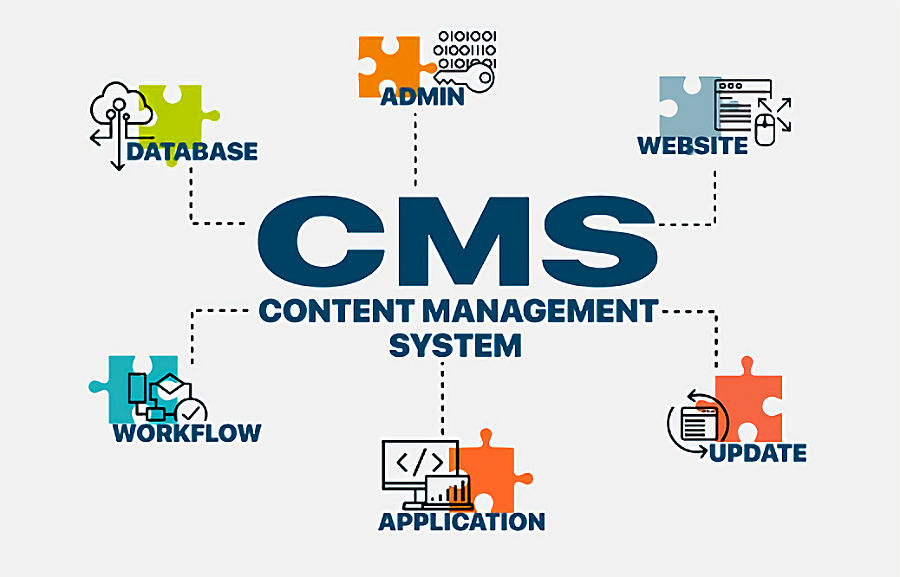
1. Traditional methods: Use CMS such as WordPress or Joomla, predefined templates, plugins, and manual configurations.
2. Vibe Coding: Describe the site to an AI and let it generate the code (HTML, CSS, JavaScript, backend) automatically.
Let's see the pros and cons of each approach.

Creating websites with traditional CMS (WordPress, Joomla)
Advantages
Mature ecosystem: WordPress and Joomla have been around for years, with thousands of templates, plugins, and communities active.
• Ease of use for non-programmers: intuitive graphical interfaces (dashboards) for managing content, menus, users.
• Integrated SEO and Marketing: Plugins like Yoast SEO (WordPress) make search engine optimization easy.
• Compatible Hosting: Almost all hosting supports WordPress/Joomla with one-click installations.
• Abundant documentation: tutorials, forums, online courses to solve any problem.
Disadvantages
Performance: CMSs can be slow if not optimized (too many plugins, heavy code).
• Security: These are frequent targets of hacker attacks; they require constant updates.
• Limited customization: Changing design or functionality beyond templates requires development skills.
• Plugin dependency: Many features rely on third-party plugins, which can stop working or become obsolete.
• Hidden costs: premium templates, paid plugins, developers for customizations.
Creating websites with Vibe Coding
Pros
Extreme speed: You can go from an idea to a working site in hours or minutes.
• Unlimited customization: AI can generate code tailored to every need, without template constraints.
• No plugin dependencies: All code is generated from scratch, reducing external vulnerabilities.
• Accelerated learning: Even beginners can build complex projects by describing them in words.
• Reduced costs: Many vibe coding tools are free or cheaper than human developers.
Cons
Code quality: The code generated can be inefficient, insecure, or difficult to maintain.
• Lack of control: If you don't read the code, you don't know what's really on your site (risk of hidden vulnerabilities).
• Debugging difficulties: When something breaks, understanding the problem requires technical skills.
• Portability: some web-based platforms (e.g. Lovable, Base44) do not allow you to easily export the code.
• Manual updates: If your site grows, you will still need to manage updates, security, and optimizations.
Comparison Chart
Item | Traditional CMS (WordPress/Joomla) | Vibe Coding | ||||||||||
|---|---|---|---|---|---|---|---|---|---|---|---|---|
Development time | Days/Week | Minutes/Hours | ||||||||||
Ease of use | High (graphical interface) | Media (requires effective prompts) | ||||||||||
Personalisation | Limited by templates | Unlimited (tailor-made code) | ||||||||||
Security | Depends on updates and plugins | It depends on the quality of the AI code | ||||||||||
Performance | Variable (often slow) | Optimizable manually | ||||||||||
Charges | Template/plugin premium, hosting | Free tools or low subscriptions | ||||||||||
Maintenance | Frequent updates | Code to be reviewed and optimized | ||||||||||
Portability | High (exportable code) | Variable (some tools are walled garden) | ||||||||||
Learning | Moderate curve | Curva iniziale bassa, ma serve recensione per produzione |
Which one to choose?
Choose a traditional CMS if:
You need to create a content-heavy site (blogs, news, simple e-commerce).
• You want a proven solution with community support.
• You have no technical skills and prefer a graphical interface.
• Budget allows for premium templates/plugins and regular maintenance.
Choose Vibe Coding if:
You want a quick prototype or a personal/customized site.
• You are familiar with AI prompts and want to experiment.
• You want total control over the code (with review).
• You want to learn by developing real projects quickly.
The third way: AI within the traditional method
The choice doesn't have to be "either/or." Coding agents are very useful for developing custom templates, forms, and plugins, automating migrations, and writing tests, as long as a professional reviews the results. It is the sense of "agentic engineering" described by Karpathy. The CMS remains the foundation for content, permissions, and security, while AI accelerates development.
When to choose what?
- CMS: company site, frequently changing content, blog, multiple languages, multiple users, customer who wants to be independent.
- Vibe coding: prototypes, unique landing pages, internal tools, static showcase sites with few changes, ideas to be validated quickly.
- Hybrid approach: Tailored sites with specific functions (configurators, dashboards, integrations), developed with AI agents and reviewed by a professional.
Conclusions
The right question isn't "which technology is more modern," but who will maintain the site in two years and who will answer for it. In our experience, now more than twenty years, a hybrid approach can help transform a site created in CMS such as Joomla, Drupal, Prestashop, WordPress into a highly performing project, with a stable and proven structure, but open to any innovation that is valid and productive.
Sources
- Patchstack, State of WordPress Security 2026: https://patchstack.com/whitepaper/state-of-wordpress-security-in-2026/
- Joomla Life Cycles: https://endoflife.date/joomla
- Joomla Roadmap: https://developer.joomla.org/roadmap.html
- InfoQ, WordPress 7.0 e l'AI: https://www.infoq.com/news/2026/07/wordpress-7-ai/
- WordPress MCP Adapter: https://github.com/WordPress/mcp-adapter
- Veracode, GenAI Code Security Report 2026: https://www.veracode.com/blog/2026-genai-code-security-report-ai-risk/
- The New Stack, Karpathy e l'"agentic engineering": https://thenewstack.io/vibe-coding-is-passe/